Field Guide / Hunting Tips
How to Use WindCast for Better Hunting






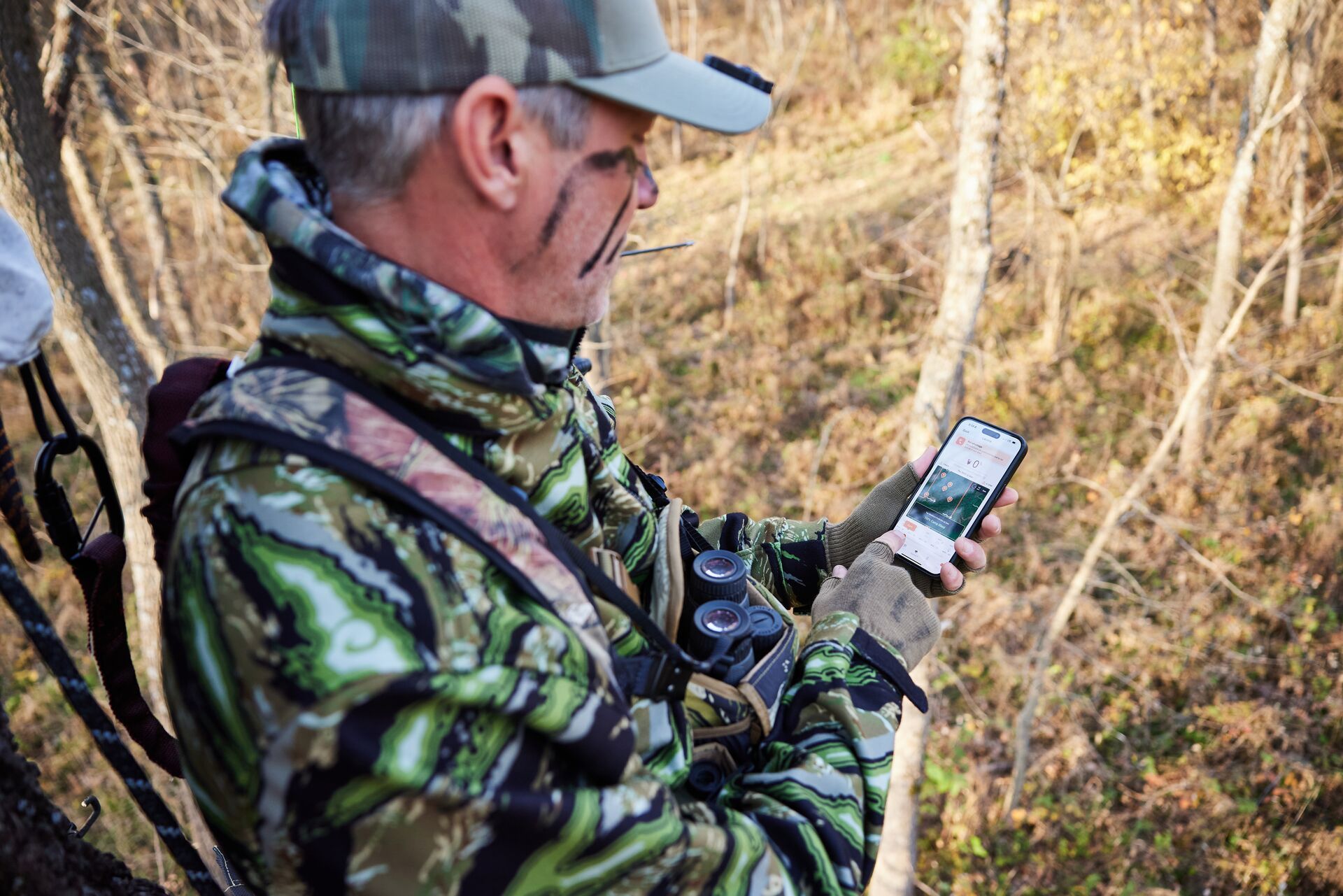
The best wind direction keeps your scent away from animals and aligns with movement.
Getting winded can ruin any hunt during any season. You could go the old-fashioned route of licking your finger and holding it up to guesstimate the direction of the wind, but we believe using the WindCast feature in the HuntWise app is a more reliable way to go.
Why is it better? Because it uses real-time data to forecast wind direction before you get into the field. With these insights, along with HuntCast, you can plan your entry into your tree stand and make sure you're downwind from the game you're after — so animals can't smell ya coming.
Let's talk about what WindCast is and why using the best wind direction app for hunting helps you avoid detection in the field.
Updated June 1, 2026
How to Use WindCast to Get the Best Wind Direction for Hunting
Knowing that wind direction matters is one thing. Knowing exactly how to use WindCast to act on it is another. Here's how to get set up and make the most of this HuntWise feature before and during every hunt.
Step 1: Set Your Hunt Area
Before WindCast can work for you, you need a Hunt Area established in the app.
Open HuntWise, tap the map, and either select a pre-set parcel based on land boundaries or draw your own custom hunt area. Name it and save it. This is your home base for all the wind data and forecasting that follows.
Step 2: Drop Your Stand and Blind Pins
Once you set your Hunt Area, start adding markers for your stand and blind locations.
- Tap the "+" icon at the bottom of the screen, select "Add Marker," and choose from the available pin types (i.e., tree stands, elevated stands, ground blinds, and more).
- Name each pin so you can tell them apart at a glance.
This step is critical for getting the most out of WindCast. The more precisely you pin your locations, the more useful your wind data becomes.
Step 3: Set Your Ideal Wind Directions
Here's where WindCast starts earning its keep!
After placing a stand or blind pin, the app will prompt you to set the ideal wind directions for that location. This tells WindCast which wind directions work in your favor for that specific spot, so it can flag the best times to hunt from it.
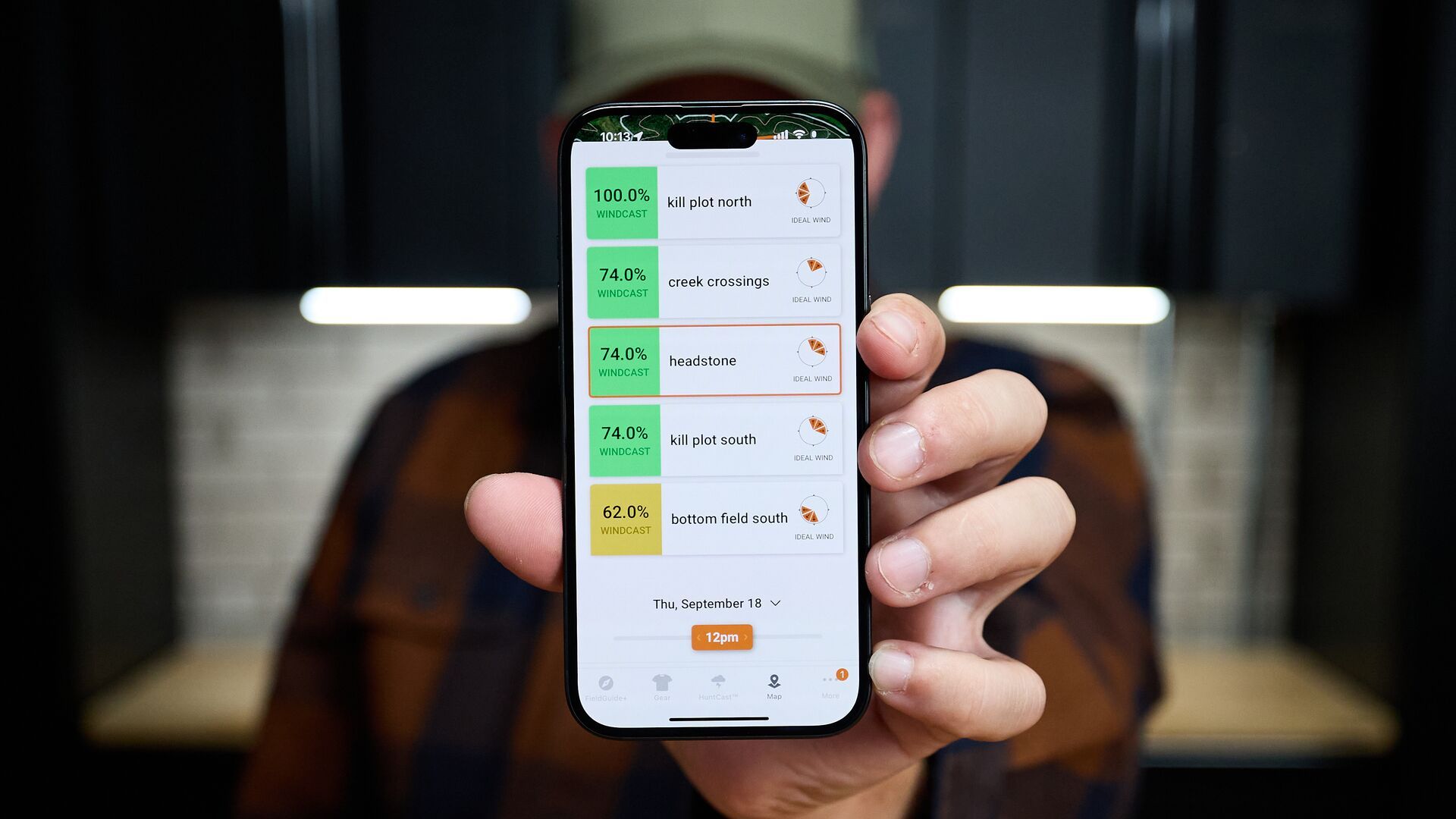
Think through your entry routes, surrounding terrain, and where deer or other game typically travel near each stand. Set your ideal wind accordingly, and WindCast does the rest.
Step 4: Read the WindCast Map
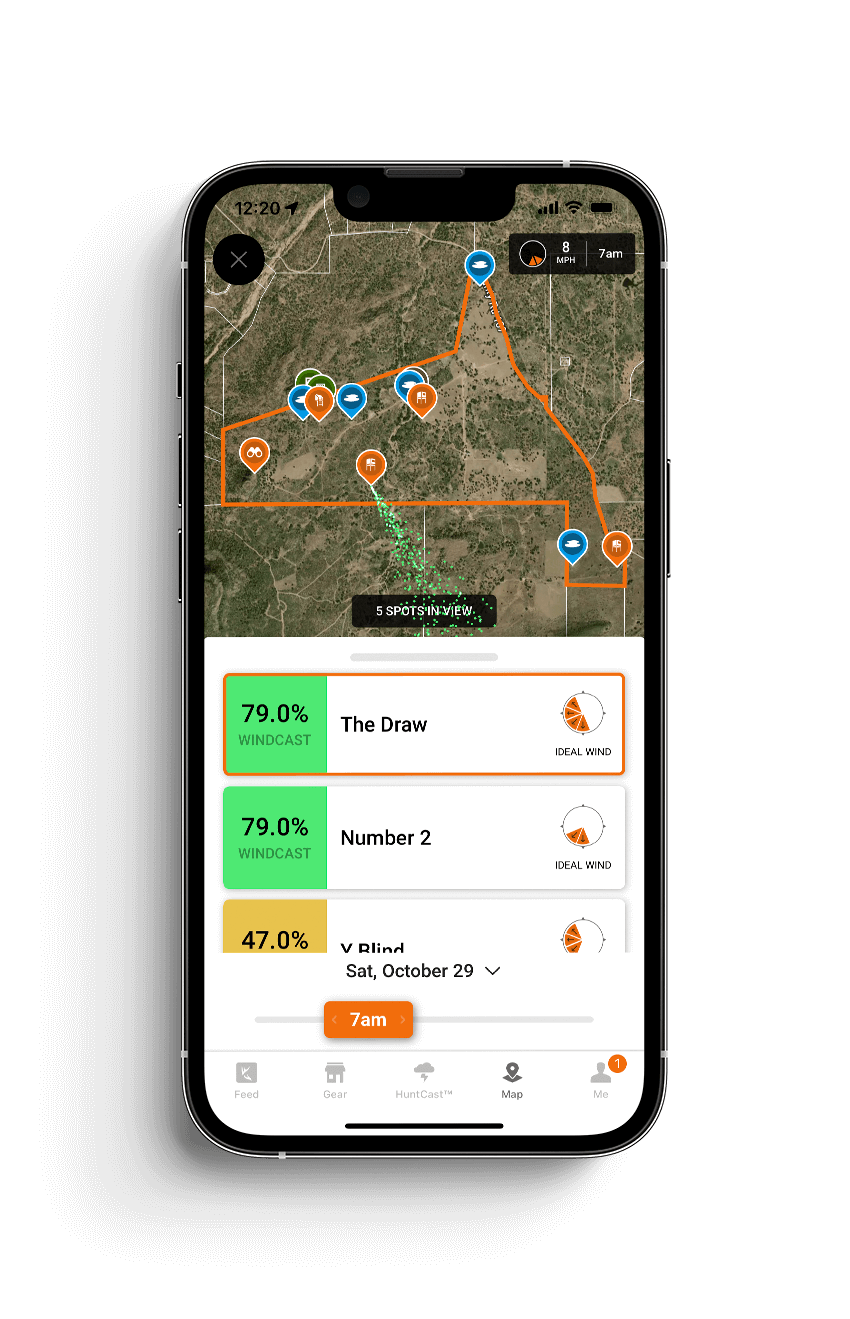
With your pins and ideal winds set, open WindCast from your Hunt Area. You'll see a real-time wind map that shows current wind direction and speed across your property, including a dynamic wind cone display that makes it easy to visualize exactly how the wind moves through your hunting area.
Use this view to:
- Confirm your entry and exit routes won't carry your scent toward game
- Identify which stands are in play based on today's wind
- Adjust your setup if the wind has shifted from your morning forecast
Step 5: Check the Ideal Wind Report (Elite Feature)
If you're on an Elite subscription, WindCast gives you access to the Ideal Wind Report — one of the most powerful tools in the app for planning hunts in advance.
This report cross-references your stand locations and ideal wind settings to identify the best days and times to hunt from each stand, based on forecasted wind data.
Instead of checking conditions the morning of a hunt, you can look days ahead and plan around the wind and weather the same way you'd plan around the rut. For hunters managing multiple properties or running tight schedules, this feature alone can change how you plan your entire season.
Step 6: Adjust Throughout the Day
Wind direction can shift significantly from morning to afternoon. Check WindCast hourly during your hunt to stay ahead of those changes. If the wind swings to an unfavorable direction for your current stand, WindCast can help you identify another stand location on your property where the wind is working in your favor, so you can make a move instead of risking getting winded.
One note before you head out: WindCast is a forecasting tool built on real-time data, but hunting the wind effectively still takes field awareness. Use it alongside your knowledge of the terrain, thermals, and animal behavior patterns for the sharpest possible edge.
Learn How to Set Up a Hunt Area in HuntWise
Take a minute and learn how to set up your Hunt Area with HuntWise's Quinn Badder in the video below! It's the first step to getting the most out of WindCast.
Why Wind Direction Matters in Hunting
Why does wind direction matter, anyway? If you're an experienced hunter, you know it's one of the most important factors to consider when planning your hunt.
However, if you're a new hunter, you may not yet understand that walking into a hunt location without checking the wind direction first can immediately alert that big buck in the area that you're there — and send them running in the other direction.
In other words, wind direction can lead to a successful tag out if you understand it and use it to your advantage.
Let's look at three crucial ways the wind's direction impacts your hunt.
1. Scent Control
You may be using scent blockers in the field to help mask your scent, but you also need to use the wind direction to hide your natural smell.
Deer and other game animals have an excellent scent of smell. They rely heavily on this to detect predators, including hunters like you. Hunting with the wind blowing toward the deer or other animals in the area is a common mistake that alerts your target and causes it to leave.
However, a windy day doesn't mean you have to cancel your hunt. Using WindCast in the HuntWise hunting app tells you the wind's direction during different times of day. With that information, you can make your approach when the wind blows in the right direction. You can also set up in a downwind position so animals don't know you're there.
2. Set Up in the Best Spot
Even if you get into your stand or blind using the wind in your favor, if you set up in a location where the wind carries your scent directly toward animals in the area, your cover is blown.
Good wind management allows hunters to remain undetected while waiting in a stand. WindCast is a great tool to use when setting up a tree stand during the off-season or when picking a tree for your saddle on the day of a hunt.
When you're in the best spot in your hunting location, the wind works in your favor and increases the chance of a successful hunt.
3. Animal Behavior Patterns
Because the wind can give you away, when animals smell you, they move in a different direction. You'll (probably) never see a buck catch a whiff of you and want to come in closer for a better smell.
Therefore, the direction of the wind influences how game animals move through the terrain. They'll often travel into the wind to detect potential threats ahead.
Again, this is where WindCast can help you plan your day. Start your day in the ideal spot based on wind direction, then adjust your position based on how the wind direction changes throughout the day.
WindCast helps you always stay ahead of the wind and use it to your advantage.
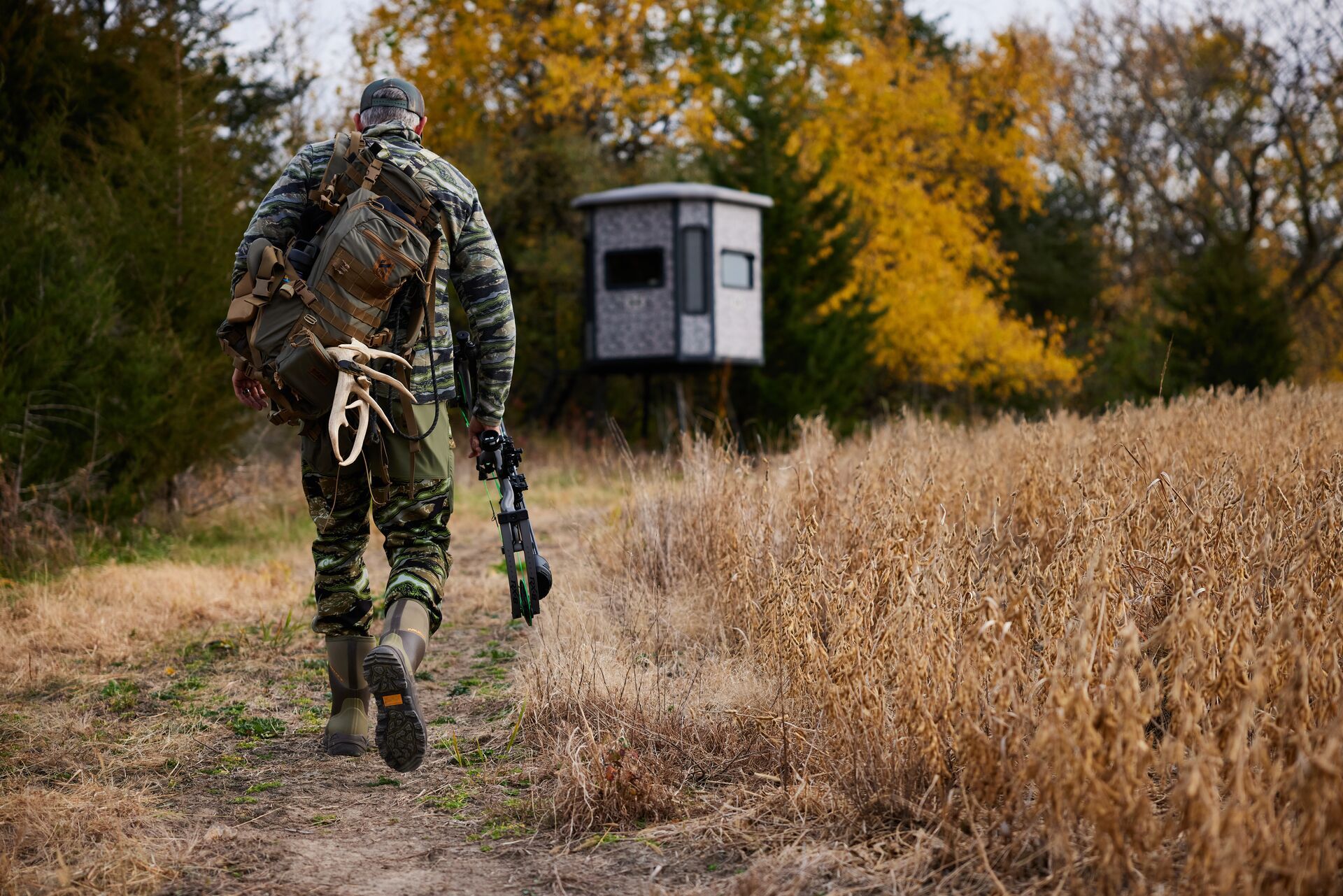
How WindCast Helps You Determine the Best Wind Direction for Hunting
WindCast helps take the guesswork out of which way the wind blows to help you plan your hunt. Let's take a closer look.
When you mark a Hunt Area in the HuntWise app, you can then dig in to learn everything you need to know about it for an efficient day in the field.
As we mentioned, WindCast uses real-time data to predict wind speed and direction in your hunt area. Depending on your subscription level, you can take advantage of our Ideal Wind Report. Set your stand locations and ideal wind, then let WindCast tell you the best days and times to hunt from each stand.
You can also use the wind direction information with your map overlays to "see" how the wind looks from various spots you've scouted and marked in the app.
But Does it Really Work?
The WindCast feature is just another feature that makes HuntWise the best wind direction app for hunting. Our friend and HuntWise Field Team hunter Cody Barhorst can tell you it does!
He says:
"The WindCast feature will show you which direction the wind will be blowing along with the mph, kind of like a general weather app. However, it will show you a map of the property or properties you are hunting, with all of your stand location pins that you previously set and a representation of how the wind will be blowing through the woods.
You will be able to see exactly where the wind will be blowing every hour.
It will also give you a comparison of which of your stands will be the best to sit in based on the wind direction. It knows this because when you put a marker down on the map of a stand location, it asks you to click the ideal wind directions for that location.
Then, it's up to you how you use that information! HuntWise shows the current temperature, sunrise and sunset, wind speed and direction, along with the percentage of precipitation. HuntWise combines everything you need into one app — and most of it is on one screen to make it simple for us hunters."
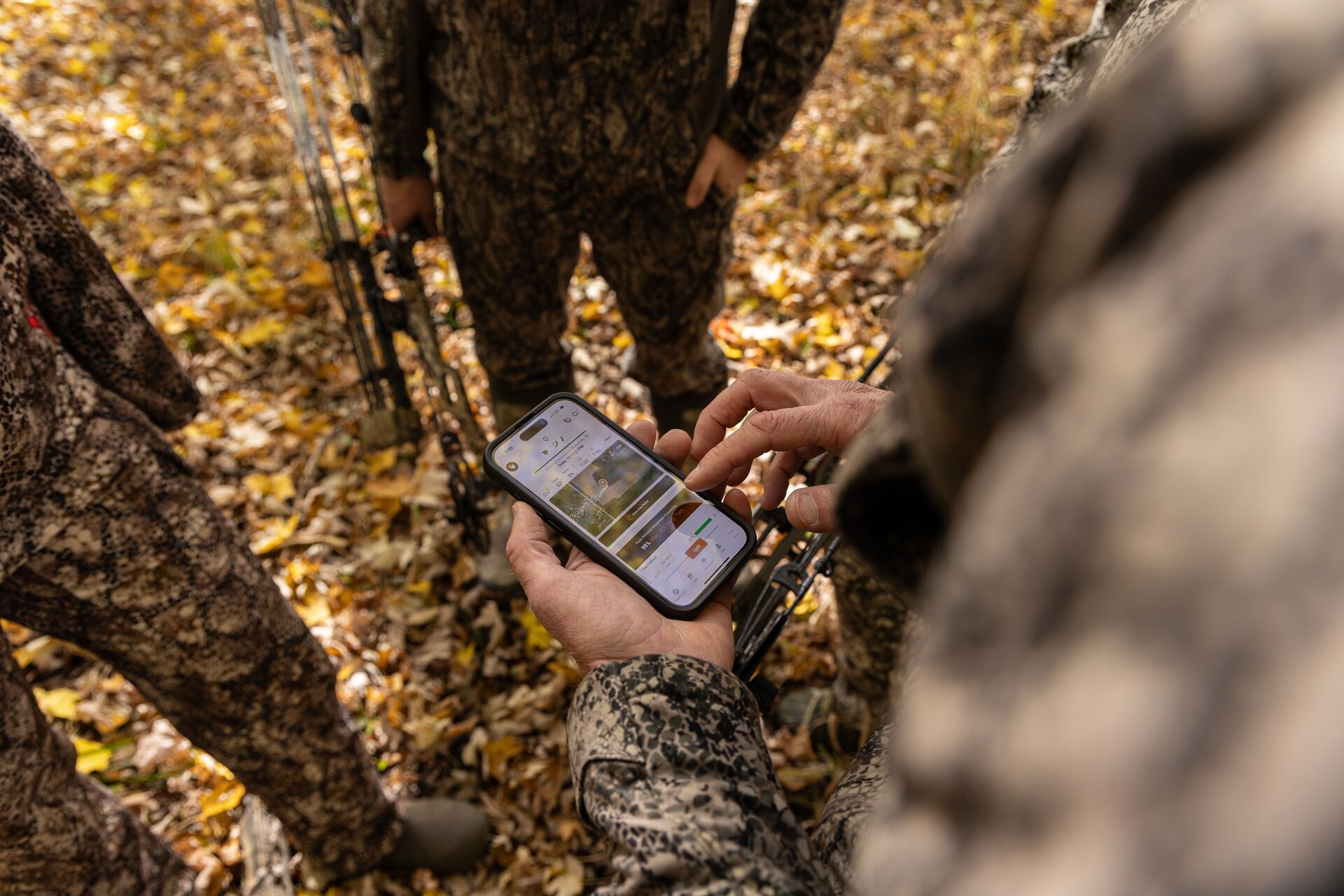
Stop Guessing and Use the Best Hunting App for Wind Direction Every Season
Whether you're looking for the best wind direction for deer hunting, hunting ducks, hunting turkeys, or anything else you hunt throughout the year, there's no need to guess at it. HuntWise and the WindCast feature do the "guesswork" for you by using real-time information and real forecasting to deliver accurate wind speeds and directions to plan your hunt.
Many hunters (like Cody) never hit the field without it! Risking being detected by animals because your wind picks up your scent can essentially render your day in the field over and unsuccessful before you even get set up.
So, don't take the risk! Stop guessing and use the best hunting app for wind direction every season.
Download it and try it — risk-free — for your first week after downloading HuntWise!
Explore all Pro and Elite features (including Ideal Wind) during your first week.
Previous in Hunting Tips
More Content Like This
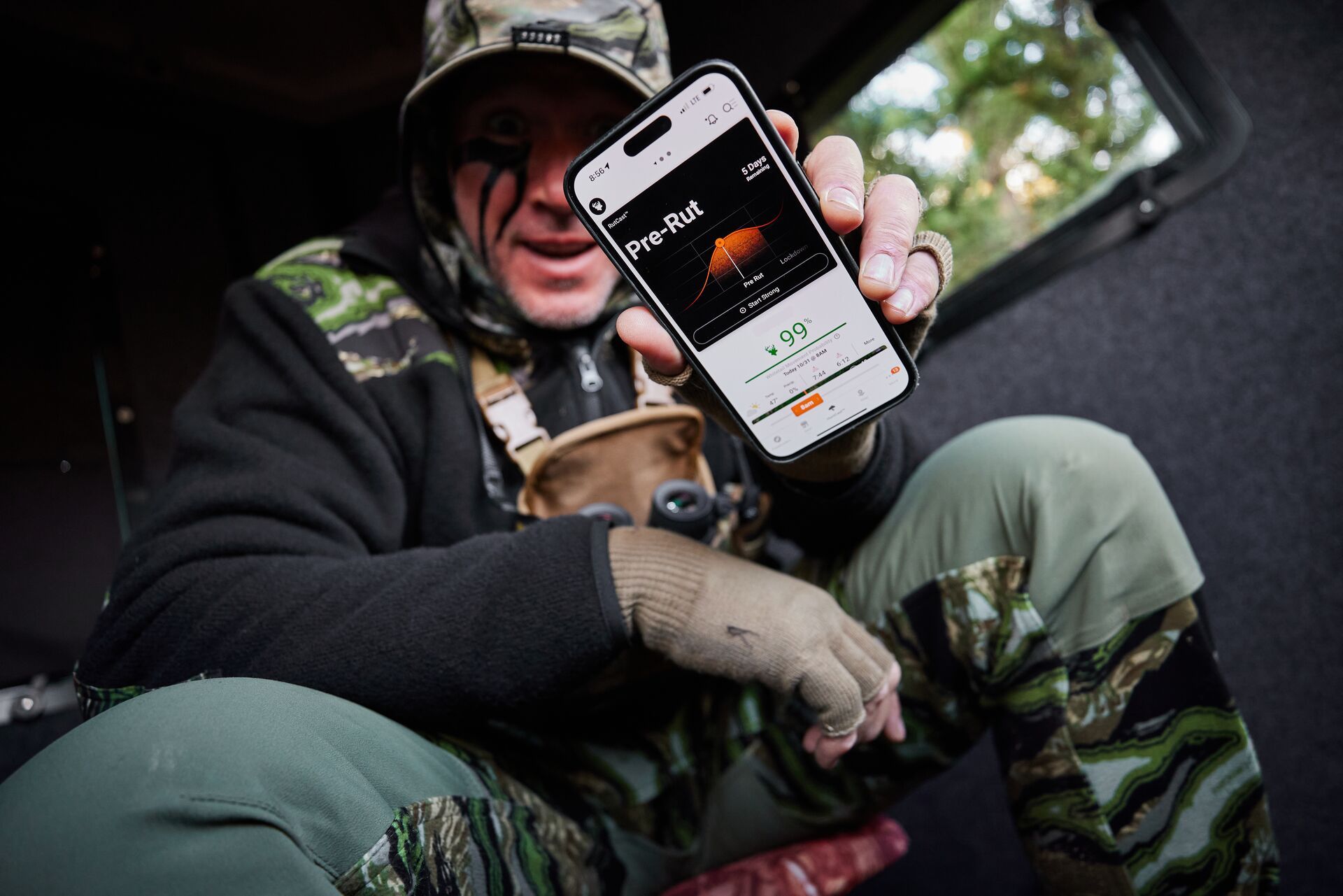
Top Hunting Apps: 22 Ways HuntWise Elite Improves Your Hunt
Hunting technology has come a long way — perhaps since you started hunting years ago with your dad or grandfather. Today, hunters can choose from several top hunting apps to help them in the field — but what makes HuntWise Elite the ultimate tool for...Read More
Read More
How to Find Deer Sheds: The Ultimate Guide
Members of the Cervidae family (deer, elk, moose, and caribou) shed their antlers every year. Understanding when and why will help you become a better shed hunter, and we've put a guide together to help. Read More
Read More
Off-Season Prep: Hunting Exercises to Stay Hunting-Ready
February could be the end of the deer season for many of you. For other hunters, the season could already be over. This means it's about time to get in the gym to stay sharp for next season. Read More
Read More- Hunting Tips
Top Hunting Apps: 22 Ways HuntWise Elite Improves Your Hunt
Hunting technology has come a long way — perhaps since you started hunting years ago with your dad or grandfather. Today, hunters can choose from several top hunting apps to help them in the field — but what makes HuntWise Elite the ultimate tool for...Read More
Read More - Hunting Tips
How to Find Deer Sheds: The Ultimate Guide
Members of the Cervidae family (deer, elk, moose, and caribou) shed their antlers every year. Understanding when and why will help you become a better shed hunter, and we've put a guide together to help. Read More
Read More - Hunting Tips
Off-Season Prep: Hunting Exercises to Stay Hunting-Ready
February could be the end of the deer season for many of you. For other hunters, the season could already be over. This means it's about time to get in the gym to stay sharp for next season. Read More
Read More
1 of 3